A person wearing a yellow outfit and headphones stands on a yellow wall with a blue background.

Your first insurance policies

Do your thing – and secure the best benefits for yourself:

  • Attractive discounts for everyone under 30

  • 3 years with the vehicle with no claims? Then you get money back

  • Protection that fits your lifestyle perfectly 

  • Extra benefits in car insurance if your parents are insured with Zurich

A person is sitting at a kitchen counter with a laptop, holding a card, looking stressed, with papers scattered nearby.

Combination discount: More protection, lower costs

If you are already insured with Zurich, you may be able to save money by taking out additional insurance thanks to the combination discount.

What customers are saying about us

E.Ö.

Friendly, fast and uncomplicated handling! Thank you!

P.S.

Very good service and easy, customer friendly process.

B.C.

Everything was dealt with between the garage and Zurich insurance. If I don’t have to worry about the payments-I.e. Zurich pays garage directly-then I am very happy.

M.G.

Assistance arrived but there was waiting time.

C.P.

Seamless process, effective communication.

E.M.

I don’t think I got the same type of frontwindow installed. Next time I will not go back to the Zurich partner, but to an official brand garage.

V.S.

Service was very good in general, professional and quick.

L.H.

Easy handling!

M.S.

Communication when it‘s needed.

Q&A

What kind of combination discounts are offered?

If you already have insurance with Zurich, you can benefit from attractive discounts when you take out certain other insurance policies: 

Do you have Zurich motor vehicle insurance?
You will receive a 5% discount when you take out household or travel insurance.   

Do you have Zurich household insurance?
You will receive a 5% discount when you take out travel insurance.   

Do you have retirement or investment insurance?
You will receive a 5% discount when you take out household, motor vehicle or travel insurance.

What offers can new customers receive?

You are between 18 and 25 years old: 

  • Household contents insurance: You will receive a 20% youth discount on household contents insurance (does not apply to natural hazards insurance).
  • Personal liability insurance: You will get a 30% youth discount on personal liability insurance.
  • Motor vehicle insurance: If you remain claim-free for three years, we will refund 10% of your premium. What's more, your premium is reduced every year until your 25th birthday. If your parents have at least 2 insurance policies with Zurich, you will receive an additional 15% discount. And if you've already had motor vehicle insurance with Zurich for at least 2 years, you'll benefit from a 10% loyalty bonus. You also receive premium protection in the event of a claim and 1 year of free traffic legal protection.

You are between 26 and 30 years old:

  • Household contents insurance: You will receive a 10% entry-level discount on household contents insurance (does not apply to natural hazards insurance).
  • Personal liability insurance: You will get a 20% beginner's discount on personal liability insurance.
  • Motor vehicle insurance: Motorcycle insurance gives you premium protection in the event of a claim and 1 year of free traffic legal protection.

You've already turned 30: 

  • In household contents and personal liability insurance: Elimination of the deductible after 3 claim-free years (does not apply to natural hazard insurance)
  • Motorcycle insurance includes premium protection in the event of a claim and 1 year of free traffic legal protection.

What is contents insurance, and what is considered as contents?

Contents insurance protects your belongings in the event of incidents such as house fires, burglaries and water damage. Imagine that your house or apartment is a doll's house and you turn it upside down. Everything that has now fallen out of it definitely  comes under contents - including the bike in the basement, the ski equipment in the garage and the luggage set in the attic. The sum insured that you choose should enable you to purchase the entire contents of the moving truck brand new.

How do I calculate the sum insured?

The sum insured corresponds to the total value of your home contents. But can anybody tell you the value you of their home contents at the drop of a hat? This is why you shouldn't just blindly rely on the standard values given by the online calculator. Because the tool doesn't know that you have a valuable mountain bike, 2,000 books or an expensive sound system. 

But be careful. If you set the sum too low, you run the risk that the insurance will only cover part of the damage if worst comes to worst. If you are unsure, we recommend that you go through the apartment with a notepad and compile all the values or use our inventory data sheet to determine the sum insured.

Which insurance policies do I really need for my first apartment?

Basically, there are no compulsory types of insurance for your first rented apartment. However, we recommend that you take out at least contents insurance and personal liability insurance.

  • Contents insurance insures your belongings. For example, it pays for the damage if your home is burgled.
  • Personal liability insurance pays for damage you accidentally cause to others. For example, if you scratch your neighbor's car with your bike.

Good to know: Landlords demand that tenants have personal liability insurance.

Is joint coverage needed in a shared apartment?

It is possible, as a shared apartment, to take out joint personal liability cover and household contents insurance. However, this is inadvisable for two reasons:

  • since roommates in a shared apartment often change, the insurance must be continuously adjusted with each change. In addition, those leaving the apartment lose their insurance coverage.
  • In a joint insurance policy, all roommates have equal coverage. However, it is possible that not all roommates require the same insurance coverage. For example, if one of your roommates only has a little furniture or another owns an expensive musical instrument.

We therefore recommend that each roommate takes out their own personal liability and household contents insurance.

Good to know: damages caused by roommates to one another are usually not covered by personal liability insurance.

Who pays for damages to my possessions that have taken place during my move?

If your friends damage something while helping you to move, their liability will be limited as they were doing you a favor. In this case, your friends' liability insurance will likely only cover a portion of the damage.

If you make use of a removal company, you should look at their general terms and conditions (GT&Cs) before entering into an agreement. Take a look at the amount for which the removal company is liable, because they may limit their liability. Clarify whether there are certain damages they cannot be held liable for. In any case, it is worth taking out special transport insurance.

Good to know: With Zurich your household contents are protected during the move up to a value of CHF 2,000, provided you have taken out the supplementary insurance "Accidental damage to contents".

Who is liable for damage that occurs during a test drive?

Here we distinguish between damage suffered by third parties as a result of an accident and damage to the vehicle itself.

Damage to third parties: The vehicle owner's motor third party liability insurance covers property damage and bodily injury suffered by third parties in the event of an accident with the car. 

Damage to the vehicle: Damage to the test vehicle itself is covered by the (comprehensive) insurance, if such an insurance exists. Otherwise, the driver must always pay for the damage himself/herself. If the driver has third-party driver's insurance, this will cover the damage. Third-party driver’s insurance can be part of a household insurance policy.

Where should I buy my first car and what do I need to bear in mind?

Basically, you can buy your car from various sources: a private individual, an official garage or an independent car dealer. You can also buy your car via an online portal. In any case, you should know what to look for before you buy.

If you buy a used car from a private individual or from an official dealer, you should pay attention to the date of the last vehicle inspection. This will help you avoid any nasty surprises. In general, you should consider the past history of the vehicle when buying a used car. How many previous owners has the car had? Has the car been serviced regularly and has this been documented? Is there any manufacturer's or dealer's warranty? If not, is it worth buying a warranty extension? 

You can find more tips on buying a used car in our Guide "5 tips on buying a second-hand car".

As a young driver, what should I bear in mind when taking out car insurance?

As a young driver up to the age of 25, you usually have higher deductibles in your car's liability insurance. This means that in the event of a claim, you will bear a larger part of the costs yourself. We therefore advise you to check the deductible when you take out the insurance.

Some insurers offer attractive benefits for young drivers. These include, for example, premium reimbursements after claim-free years or low-cost product solutions.

Zurich offers young drivers under the age of 25 a variety benefits:

  • After three years with no claims, you will get ten percent of your premium back.
  • Your premiums will reduce year by year until your 25th birthday.
  • You will receive a 15 percent discount if your parents already hold at least two policies with Zurich.
  • You will receive a combination discount, if you take out household contents or life insurance with Zurich.
  • You will receive a 10 percent discount if you have had an existing motor policy with Zurich for at least two years.

What does a car cost per month?

There is no general answer to this question. The maintenance costs of a vehicle vary too greatly for that. Important points to consider are fuel or electricity consumption, traffic taxes, insurance, service costs and costs for parking spaces. 

Basically, however, you should be aware that a car will cost you money every day, even if you don't move it.

How can I keep my costs to a minimum when driving?

An anticipatory driving style with sufficient distance, gentle acceleration and braking will reduce the costs of driving a car in the long term. With a moderate driving style, you will protect your brakes and at the same time reduce the risk of rear-end collisions. This will enable you to save on costs for minor repairs and deductibles.

What do you need to take with you in the car?

On Swiss roads there are certain things you have to take with you in the car. Otherwise you may be fined. The following documents and items are compulsory in the car:

  • Driver's license
  • Vehicle registration document
  • Exhaust emission document (for vehicles without OBD error memory)
  • Breakdown triangle
  • Highway permit sticker (for highways)

Depending on the country, different regulations will apply abroad. Find out about the regulations of the respective country before you travel abroad.

Who is covered by travel insurance?

Depending on the agreement, the insurance covers the individual or all persons living in the same household.

  • Individual: The policyholder is insured
  • All persons living in the same household: The insurance covers the policyholder and all persons who live with the policyholder in the same household or who regularly return to the policyholder's household as weekly or weekend residents. Further information on insurance cover can be found in the GCI in our downloads.

Does travel insurance include the costs of repatriation in the event of illness or death?

Yes, repatriation in the event of serious illness or accident on the part of the insured person to their fixed residence in Switzerland or the Principality of Liechtenstein and/or the respective local hospital is covered.

Furthermore, the costs for the burial and transportation of the body of the insured to their residence in Switzerland or the Principality of Liechtenstein are likewise covered.

Is my breakdown assistance cover also valid while traveling abroad?

The insurance applies to occurrences of loss within Switzerland and the Principality of Liechtenstein, European countries as well as countries bordering the Mediterranean and the island states of the Mediterranean. For transport across the sea the insurance coverage will continue uninterrupted, providing the point of departure and destination are within the region of validity.

However, the insurance does not apply in the following countries: Belarus, Moldavia, the Ukraine, the Russian Federation, Georgia, Armenia, Azerbaijan Kazakhstan, Egypt, Algeria, Lebanon, Libya and Syria.

Occurrences of loss or damage pertaining to rental vehicles are not covered.

What does the luggage insurance cover?

The insurance covers luggage which the insured person has with them for personal and private use on a journey or which has been handed over to a transportation company for transport to the travel destination, up to the sum insured listed in the policy.

Damage to luggage

The insurance covers damage to luggage as a result of theft or sudden, unforeseeable damage, destruction or loss. Parachutes, paragliders, hang gliders and kitesurfing equipment are only insured against theft or loss.

Delayed luggage

The insurance covers the costs for absolutely essential acquisitions of replacement items up to 30% of the sum insured, if the luggage handed over to a carrier for transportation is delayed.

Should I need to cancel a trip for business reasons, will the insurance cover the costs?

No, unless

- an insured person's contract of employment is terminated unexpectedly by the employer (culpable termination is not insured);
- an insured person, who is registered with the regional employment office (RAV) as unemployed after booking a travel arrangements becomes unable to commence travel due to new unforeseen needs to comply with commitments and obligations set forth by the RAV office, or in cases where the insured person accepts a new contract of employment and as direct consequence is unable to commence the previously booked travel;

Why is pillar 3a worthwhile?

Pillar 3a offers you an ideal combination: you save taxes today and at the same time build up a financial cushion for your retirement. Payments can be deducted from taxable income annually, reducing your tax burden. Over the years, the compound interest effect helps to steadily increase your assets until retirement. In this way, you can close possible gaps from the 1st and 2nd pillars and better maintain your standard of living in old age.

This pension solution is ideal for people who are subject to AHV contributions, want to save taxes and build up assets in the long term.

When can I withdraw my savings from pillar 3a and what are the exceptions?

The money saved in pillar 3a is primarily used for your retirement provision. A regular payment is possible at the earliest five years before the ordinary reference age. 

Exceptions:

  • Purchase or construction of owner-occupied residential property
  • Taking up self-employment
  • Definitive departure from Switzerland
  • Repaying a mortgage
  • Receipt of a full disability pension

You must apply for an early payment and prove your exceptional case.

Good to know: You can also have several pillar 3a pension solutions and make the withdrawals in stages. In this way, the tax burden is lower because you do not have to pay tax on all your assets at once. In general, it is advisable to check what the tax consequences are and what impact it will have on the overall pension provision before making a payout.

How does Switzerland’s three-pillar concept work?

The Swiss retirement provision system is based on three pillars:

  • state retirement provision (1st pillar)
  • occupational retirement provision (2nd pillar) 
  • private retirement provision (3rd pillar)

The aim of the Swiss retirement provision system is to provide the country's population with a reliable income for all life situations. For example, after retirement, in the event of the death of a partner or in the event of permanent disability due to illness or accident. 

1st pillar – state retirement provision

The 1st pillar is about ensuring subsistence. This pension is intended to cover the minimum necessary living requirements. The 1st pillar consists of old-age and survivors' insurance (OASI), disability insurance (DI) and the income compensation scheme (EO).

Find out more at vita.ch

2nd pillar – occupational retirement provision

The 2nd pillar ensures your accustomed standard of living. For occupational retirement provision, employees and employers pay at least the same amount into a pension fund. The employer can also volunteer to pay more.

Find out more at vita.ch

3rd pillar – private retirement provision

The assets in the 3rd pillar serve to close any pension gaps from the 1st and 2nd pillars. It also allows you to retire earlier or fulfill dreams and wishes after retirement.

Find out more at our article about the third pillar.

Bank or insurance: what are the differences in the 3rd pillar?

The biggest differences between a pillar 3a solution from a bank or an insurance company relate to the risk protection for you and your family, your savings goal and the period of insurance.

Risk protection for families and savings goal
With an insurance company, you take out an insurance contract under pillar 3a. This includes insurance coverage in the event of disability and/or death. This means that if you become disabled, your insurance will pay the annual amount due into pillar 3a for you. You will therefore continue to save for retirement, even if you can no longer work. Depending on the retirement provision solution you choose, you will also be paid a disability pension until retirement. In any case, you will meet your defined savings target. In the event of death, a lump-sum death benefit will be paid to your surviving dependents. This means that your loved ones will at least be protected from the financial consequences of this misfortune. You pay for this insurance coverage with a portion of your premium.

When you open your pillar 3a with a bank, the main focus is on the savings process. You and/or your family will not be protected against the financial consequences of disability or death. If you can no longer pursue your work, you will no longer be permitted to pay into pillar 3a. In this case, you will not reach your defined savings goal. 

Period of insurance
Insurance contracts under pillar 3a always have a fixed period of insurance. This usually extends until the normal retirement age. You undertake to pay a certain amount into the pillar 3a policy on a regular basis. 

After the third insurance year, however, you have the option of pausing payments for up to three years. Insurance coverage does not expire in this case. This means that you will continue to be fully insured if, for example, you go on parental leave or spend time abroad. The only consequence is that your savings target will be reduced by the amount of the paused payments.

Can I deduct contributions for retirement provision on my tax return?

You can deduct payments made into a restricted pension plan (pillar 3a) from your taxable income. And this is regardless of whether it is a 3a policy with an insurance company or a 3a savings account with a bank. The maximum deposits are however limited. You can close any shortfalls in your pension fund (2nd pillar) with purchases that are generally tax-deductible. However, you should not only consider purchases into your pension fund from a tax perspective, as it is also important to plan well.

How can I save taxes with pillar 3a?

You are allowed to deduct the payments into pillar 3a from your taxable income and therefore reduce your tax burden. Employees and self-employed persons who are affiliated to a pension fund may pay in and deduct up to CHF 7,258 (2023). Self-employed persons who are not affiliated to a pension fund can pay in and deduct up to 20 percent of their net income subject to AHV / OASI contributions, up to a maximum of CHF 36,288 (2025). For every 1,000 francs paid in, you can save between 150 and 400 francs of tax, depending on your income and place of residence.

 The credit balance (assets) and any interest income are not taxed until they are paid out. However, the credit balance is then taxed separately from income when it is paid out. This capital benefit tax is progressive. That is why you should have several 3a solutions and liquidate them in different years in order to optimize your tax burden. A capital withdrawal is possible five years before reaching the AHV / OASI retirement age. Each 3a solution must be liquidated completely.

Guide

A bunch of keys lies in an open hand above a rental agreement

Rental deposit in Switzerland: insurance or custody account?

Key points about Rent deposits: find out briefly and clearly how custody accounts and insurance work and what options are available in Switzerland.
Learn more
Woman is on cell phone and holding credit card

New smartphone? This insurance makes sense for you.

Is it worth getting cellphone insurance for my new smartphone? We show you the options available. And which of them makes most sense for you.
Learn more
A motorcycle in the landscape.

Motorcycle equipment: Well protected on the road

Fun and safe rides with the right equipment! Find out what matters when it comes to helmets, protective clothing, etc.
Learn more
Woman sits in the car and shows her car key out of the window

The direct route to a driver's license

With the right preparation, appropriate practice routes and the necessary insurance coverage, you can move closer to a sense of freedom step by step.
Learn more
Young woman sitting at the wheel of a car

Well protected as a young driver

Licensed to drive at last! Here you can find all the important information about the topic of "Safety for young drivers" – so that you are covered should you encounter any problems.
Learn more
Young woman attaches surfboard to the roof of the car

Damaged a borrowed car – what now?

Damaging a borrowed car can be expensive. You can get insurance for it: with additional private liability insurance coverage for "Driving third-party motor vehicles."
Learn more
A hand giving a thumbs-up is sticking out of a car window.

Take out a car subscription instead of buying or leasing

A car subscription allows you to switch vehicles flexibly according to your needs. Is this new type of mobility something for you? Find out.
Learn more
Woman sitting at the kitchen table working on a laptop, with tax documents next to her.

Clever tax savings: These are the deductions you should know about

From travel costs to pillar 3a: Find out which deductions are possible in Switzerland and how you can use simple measures to significantly reduce your tax burden.
Learn more
 Woman grinds a table

Sharing economy: renting instead of owning

Sharing instead of owning outright is currently the trend. No wonder, since this allows us to protect the environment and our wallets. But what do renters and lenders need to look out for? Find out in our article!
Learn more
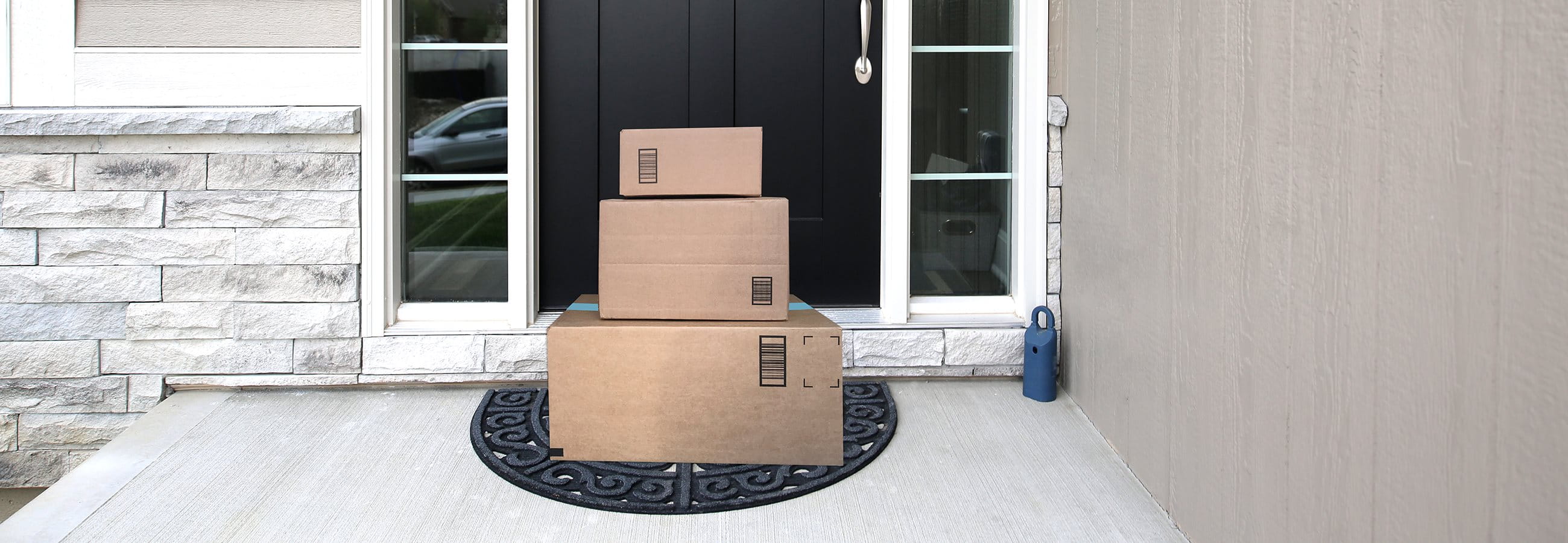
Package outside the front door

Stolen package - this is how you are protected

The long-awaited package has not show up – it has obviously been stolen. Now what?
Learn more
Laughing woman

As a result, you enjoy all-round protection at home.

Household insurance covers household contents insurance and personal liability insurance and is the basic insurance for your home.
Learn more
Couple walking in autumn

Practical tips for your retirement provision

Robust retirement provision will benefit you now and in the future. We show you how you can best leverage all three pillars. The sooner you start saving for your retirement, the more you will get out later!
Learn more
A family moves house

Household contents insurance: how to protect yourself against underinsurance

In household contents insurance, it is important that the sum insured realistically reflects the value of such contents – otherwise you risk underinsurance.
Learn more
Family enjoying time spent in the bedroom

Home Assistance: fast help for domestic emergencies

Locked out? Flooded? Bedbug invasion? Home Assistance offers help for domestic emergencies – it makes sense for homeowners as well as tenants.
Learn more
Two women are smiling and holding books, one is carrying a box with plants.

First apartment of your own: Checklist, tips and insurance

This marks the beginning of an exciting new phase of life. Discover practical tips, helpful checklists and insurance information for a successful start.
Learn more
A woman joyfully hugs the hood of a blue car.

My first car – a guide for novice drivers

Thinking about whether it's worth having your own car? Find out what you should pay attention to and which questions are important for you.
Learn more